
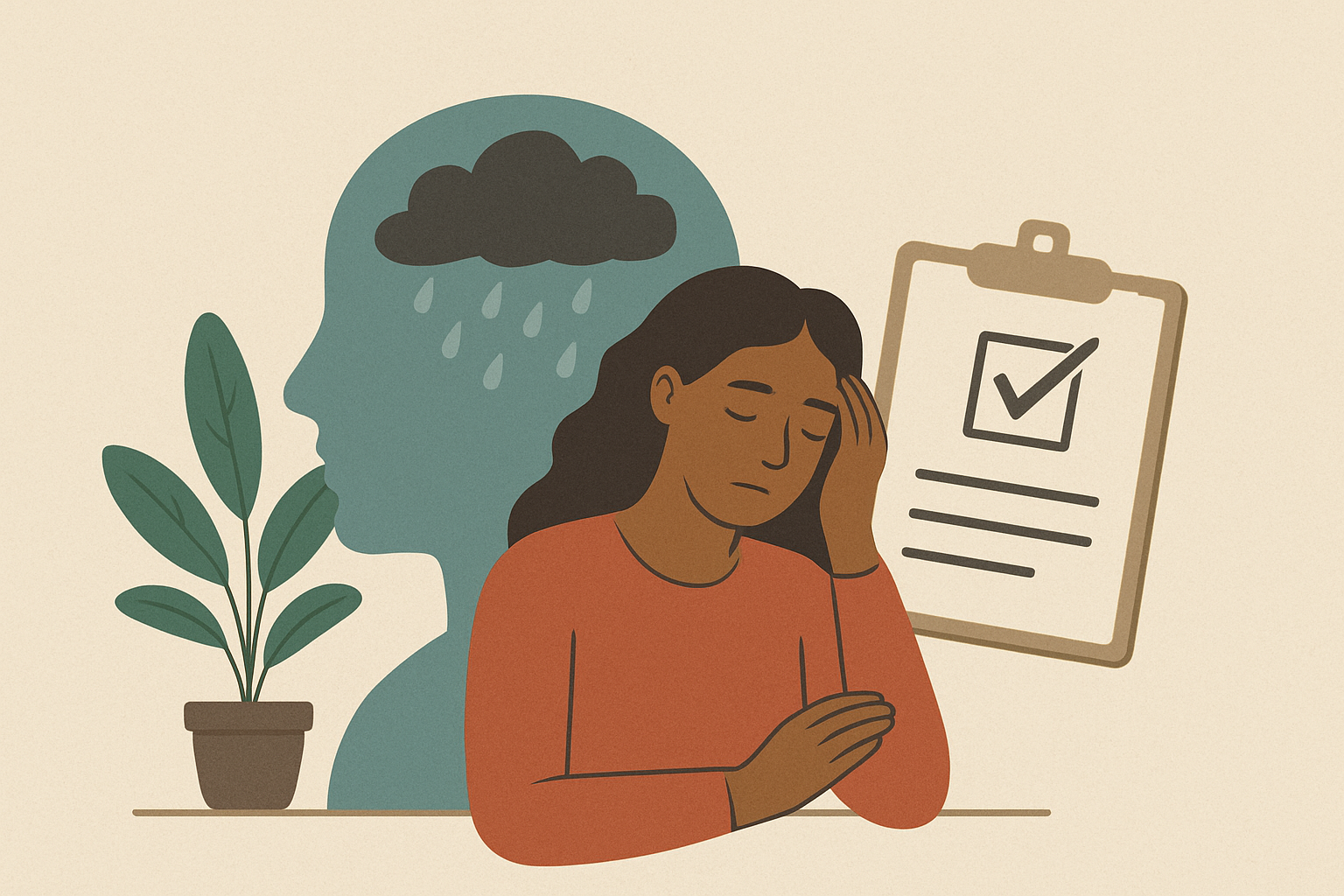
Your Mind Matters: National Depression & Mental Health Screening Month

Welcome to our mental health blog. Every October, National Depression and Mental Health Screening Month reminds us that mental health is just as important as physical health—and that early, confidential screening can save lives.
Depression touches millions each year, yet many suffer silently for months or even years.
Screenings provide a private first step toward understanding what you’re feeling and connecting to care—without judgment or stigma.
“You cannot pour from an empty cup. Caring for yourself is caring for those you love.”
Why This Movement Is So Important
Early detection saves lives. Half of all mental health conditions begin by age 14, and 75% by age 24. Early screening reduces severity and improves recovery.
Screening Saves Lives
• 75% of mental health conditions begin by age 24.
• Early detection cuts recovery time and reduces crisis risk.
Screenings reduce stigma. Free, confidential tools make it easier to acknowledge symptoms and reach out for help.
It’s preventive health care. Just like blood pressure checks or mammograms, mental health screenings monitor your well-being before a crisis arises.
Screenings are not diagnoses; they’re a doorway to clarity and support.
Conditions Commonly Screened—And Often Overlooked
Mental health screenings can assess a wide range of concerns. Some are well known, others slip under the radar—especially for busy parents or anyone juggling work, caregiving, and life’s constant demands.
Frequently Screened Conditions
-
Depression and persistent low mood
-
Anxiety disorders (generalized, panic, social)
-
Bipolar disorder
-
Post-traumatic stress disorder (PTSD)
-
Substance use disorders
Often Overlooked but Equally Important
-
Postpartum depression and anxiety – easily dismissed as “new-parent stress.”
-
ADHD in adults – especially in women, where symptoms can be more subtle.
-
Burnout and chronic stress – can lead to physical illness if untreated.
-
Eating disorders – sometimes hidden behind dieting or fitness trends.
-
Sleep-related mental health issues – insomnia or sleep apnea affecting mood and cognition.
“It’s easy to put yourself last—especially when caring for children, aging parents, or a demanding job.
But caring for your mind is not selfish. Screening is a way to care for yourself so you can continue to care for others.”
Free & Confidential Screening Resources
Nationwide Online Tools
-
Mental Health America Online Screening – Free, anonymous assessments for depression, anxiety, PTSD, and more.
-
NAMI – Call 1-800-950-NAMI or text “Helpline” to 62640 for guidance and resources.
Florida-Based Options
-
Peace River Center – Online self-assessments and 24/7 crisis support for Polk and surrounding counties.
-
Thriving Mind South Florida – Mental health and substance-use services in Miami-Dade and Monroe counties.
-
Outlook Clinic (Orlando) – Free outpatient mental health care for uninsured adults.
-
Florida Department of Health – Mental Health Resources – Statewide links to local screening and crisis services.
Crisis Support (24/7, Free, Confidential)
-
988 Suicide & Crisis Lifeline – Call, text, or chat 988 anywhere in the U.S. For Deaf/HoH
-
American Cancer Society Hotline – 1-800-227-2345 for emotional support tied to cancer-related mental health concerns.
Gentle Self-Care While You Screen
- Pause and breathe. A screening result is information, not a verdict.
- Reach out. Share your results with someone you trust or a professional.
- Track your mood. Use a journal or app to monitor changes and bring notes to appointments.
- Seek professional guidance. A therapist or primary care provider can interpret results and discuss next steps.
“🌿 Your Mind Matters: Take time out today for a confidential mental health screening. 🌿“
Supportive Reads & Tools
- Maybe You Should Talk to Someone by Lori Gottlieb, LMFT — A therapist shares her journey both in the therapy chair and on the couch as a client, revealing how therapy helps people from all walks of life. Inspiring, relatable, and stigma-breaking.
-
Feeling Good: The New Mood Therapy by David D. Burns, MD — A classic book on evidence-based tools for managing depression and negative thoughts.
Guided Journals by Gisella Garcia:
-
Steady Heart Journal – A 3-month guided wellness check-in journal designed to help you track your mood, energy, and emotional well-being. It’s a gentle tool for noticing patterns, setting intentions, and practicing self-compassion — a perfect companion to mental health screenings.
- Breath by Breath – A guided anxiety journal created to help you slow down, breathe mindfully, and release tension through daily reflection and grounding prompts. Ideal for anyone seeking calm amid stress or emotional overwhelm.
- She Who Returns to Herself – A reflective journal for reclaiming your sense of self after emotional pain or betrayal. It offers healing prompts that encourage self-awareness, forgiveness, and inner strength.
Conclusion
Screening for depression and other mental health conditions is an act of courage and self-care.
It doesn’t label you; it informs you—offering a pathway to understanding and support.
This October, let’s normalize mental health screenings just as we do blood pressure checks.
Because every mind deserves attention, and early action can change—and even save—lives.
Takeaway
Mental health screenings are simple, confidential, and life-saving.
They help uncover conditions—both familiar and often overlooked—before they deepen.
And when you care for your own mind, you protect your ability to care for those you love.
This month, give yourself the gift of a check-in.
Pause. Screen. Seek support.
Because your well-being matters—today, tomorrow, and always.
If you are ready to take that step, consider reaching out to professionals who can walk with you on your journey. Whether through Ellipsis Counseling Center or another resource, help is always within reach.
Thank you for joining us as we continue to promote mental well-being and break the stigma around emotional complexity. Stay tuned for more insights, tips, and stories on our mental health blog.
If you’d like to share your story related to this topic, email us at ellipsiscenter@gmail.com. You can remain anonymous or include your name.